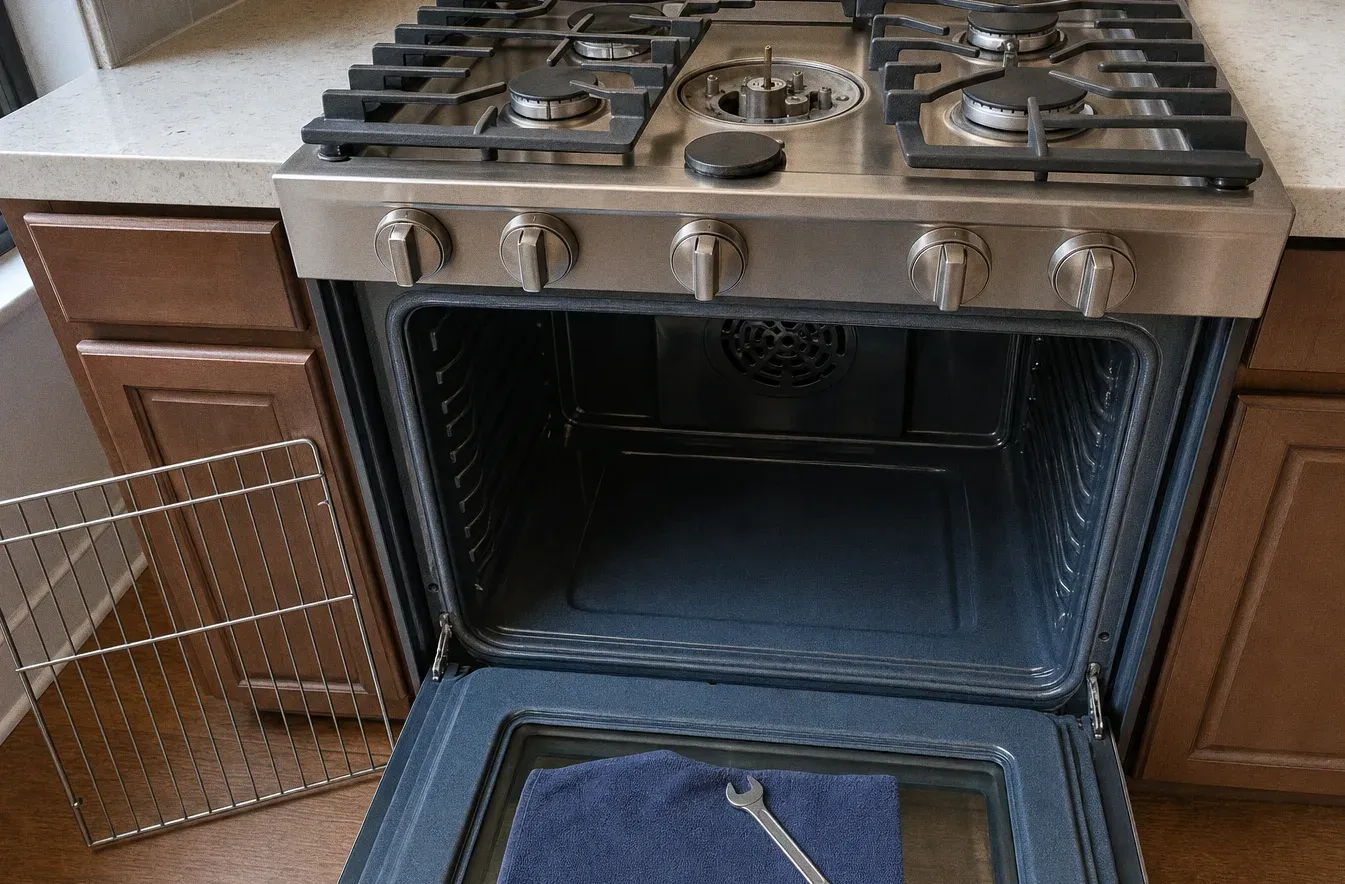
Wolf Oven Temp Probe Reading Wrong? How to Test It Properly
Check a Wolf oven temp probe against an instant-read thermometer you have first proven in boiling water, at about 212°F. If the oven itself runs hot or cold, suspect the cavity sensor or its calibration, and confirm with an oven thermometer at 350°F.
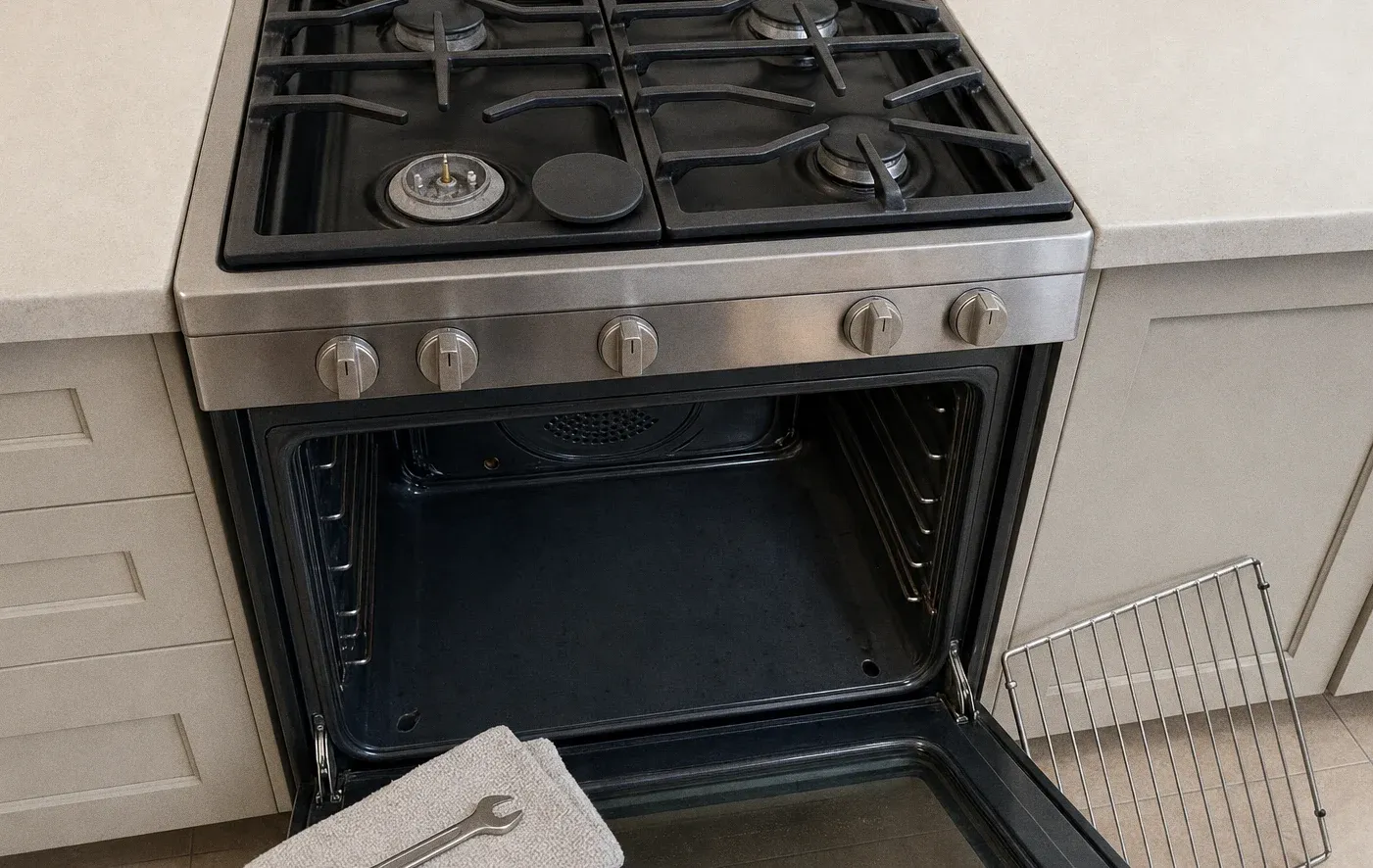
A Wolf oven relies on two separate probes, and the fix depends on which one is giving you a bad number. The plug-in probe is the cable you push into a roast and connect to the jack on the oven wall; test it against an instant-read thermometer that you have first checked in boiling water, where it should show close to 212°F. The fixed sensor is the thin rod near the top of the back wall that the control reads to hold your setpoint, and you check that one indirectly, with an oven thermometer set on the middle rack at 350°F.
Sorting this out first saves money, because a probe fault and a drifting oven look alike from the counter. Half an hour of testing usually tells you whether the answer is a menu setting you can change yourself or a part that needs replacing.
Two probes, two different jobs
The plug-in probe is an accessory. It reports the temperature inside the food, and on Wolf ovens that support it, the oven can alert you or change what it is doing once the food reaches the target you chose. It never runs the cavity heat on its own. If it fails, the oven still bakes normally; you simply lose the probe readout, or the display shows a probe message even though nothing is connected.
The cavity sensor is part of the oven itself. Its electrical resistance changes as it warms, and the control board reads that resistance constantly to decide when to switch the elements or the burner on and off. When the sensor drifts, the whole oven drifts with it. When it fails outright, most controls stop heating and show a fault rather than guess.
Testing the plug-in probe at home
Start by proving your reference. Hold a good instant-read thermometer in a pot of water at a full rolling boil. Boston sits barely above sea level, so it should read very close to 212°F; if it does, you can trust it to judge the Wolf probe.
The next time you cook a roast with the probe, push the instant-read stem into the same spot, the thickest part and away from bone, at the moment the oven announces the target. Readings within about five degrees of each other mean the probe is healthy, and the recipe or the resting time deserves the blame. A gap of fifteen degrees or more, a readout that jumps around, or a display that never registers the probe points to the probe itself.
Look at the cable and the jack
Most probe faults are physical. Run the cable slowly through your fingers and feel for kinks, flattened spots, or a stiff, discoloured stretch where it touched a hot element or got caught in the door. Check the plug for scorched or bent contacts, then shine a flashlight into the jack on the oven wall; baked-on grease in there can break the connection. With the oven off and fully cool, a dry cotton swab is enough to clear it. A damaged probe gets replaced as a whole part, since the cable cannot be spliced safely.
Never leave the probe in the cavity during self-clean. That cycle runs far hotter than the cable is built for, and a probe that has been through it once is rarely accurate afterward. If the self-clean cycle itself is causing trouble, our note on a Wolf oven door that stays locked after self-clean deals with that separately.
Checking the oven with a thermometer
When the probe passes but food still cooks slowly or unevenly, test the cavity. Stand or hang an oven thermometer in the center of the middle rack, set the oven to 350°F in plain bake rather than convection, and wait for the preheat signal plus another twenty minutes. Then take a reading every five minutes for half an hour, opening the door as briefly as you can, and average the numbers. Cheap dial thermometers can be off themselves, so a second one alongside helps.
Expect the needle to swing. Every oven cycles its heat around the setpoint, so readings a little above and below 350°F are normal, and only the average matters. An average within about ten degrees needs nothing. One that sits fifteen to twenty-five degrees off, in the same direction every time you test, is the textbook case for calibration. Anything larger, or an oven that never gets to temperature at all, suggests a part is on its way out.
Calibration: the fix to try first
Most Wolf ovens let you shift the temperature the control aims for through the settings menu on the panel. The exact path differs between generations of controls, so follow the owner’s manual for your series. Make one change based on your averaged reading, then repeat the thermometer test to confirm it landed where you wanted.
Calibration suits a steady, predictable offset. It is the wrong tool for an oven that is accurate one week and off the next, or one that runs hot at 300°F but cold at 450°F. Those patterns mean the sensor or the heat source is behaving inconsistently, and dialing in an offset only hides the symptom until the part quits.
When the sensor, igniter or element is to blame
A technician settles this by measuring rather than guessing. The cavity sensor’s resistance is read at room temperature and again while warm, and both figures are compared with the specification for that oven. A sensor with a cracked sheath or a chafed lead often reads fine cold and wanders once it heats up. The wiring between the sensor and the control board gets checked at the same visit, since a loose terminal produces exactly the same drift.
On an all-gas Wolf range, a slow or cool oven often comes down to the bake burner’s igniter. A glowing igniter has to draw enough current before the gas valve will open; as it weakens with age, the burner lights late or not at all, and the oven struggles to hold heat. Dual-fuel ranges and wall ovens heat electrically, so there the usual culprits are a partly failed bake or convection element, a convection fan that has stopped turning, or a door seal that has flattened and leaks heat. Our Wolf oven repair page covers every one of these, and Wolf range repair takes in the burners and ignition up top.
What a visit involves and what it typically costs
Each visit begins with a flat $95 diagnostic call. That fee pays for the trip and the testing, and it comes off the bill once you approve the repair. Typical ranges for this kind of work are below, with the firm price given only after the diagnosis:
- Oven thermostat or sensor calibration: $140–$660
- Igniter or spark module replacement: $280–$690
- Control board or touch panel: $540–$1,600
- Door hinge, glass or seal: $200–$970
A failed plug-in probe is usually just a replacement accessory, so confirm that at home before booking anything. To arrange a visit in Back Bay, Beacon Hill, Jamaica Plain or Washington Square, call (617) 396-3696 or use the booking link on this site.
Asked on the phone
Where is the temperature sensor inside a Wolf oven?
The cavity sensor is a thin metal rod on the back wall of the oven, near the top. Screws hold it in place and its wires pass through to the control behind the panel. Avoid bending or tugging it while you clean, because a damaged sheath is a common source of temperature drift.
Can I leave the Wolf temperature probe plugged in when I am not using it?
No, unplug it and put it away between uses. A probe left in the jack can raise a probe message, get pinched by the door or rest against a hot surface, and it must never stay inside during self-clean, which ruins both the cable and its accuracy.
How far off can a Wolf oven run before it needs calibration?
An averaged reading within about ten degrees of the setpoint needs no change at all. A steady offset of fifteen degrees or more, always in the same direction, is worth correcting through the calibration setting in the control menu, followed by a second thermometer test to confirm it.
Why does my Wolf oven take so long to preheat?
Slow preheating usually points to the heat source rather than the probe. On a gas oven a weakening igniter is the usual suspect; on an electric oven a partly failed element, a convection fan that has stopped or a flattened door seal can do it. Each one is measured during the diagnostic visit.
Should I test oven temperature in convection mode?
Test in plain bake first. Convection moves the air around, and some ovens lower the setpoint on their own in convection modes, so a thermometer can look wrong when nothing is. Once bake mode proves accurate, convection results generally follow.